1. What Exactly is Trézór Bridge®™?
Trézór Bridge®™ is a lightweight communication program that runs as a background process on your operating system (Windows, macOS, or Linux). Technically referred to as trezord (Trezor Daemon), it acts as a local server (localhost) that listens for signals from your hardware wallet via the USB connection and relays them to your web browser.
The Problem It Solves
In the early days of crypto, browsers had no standardized way to talk to USB devices (like Human Interface Devices or HIDs). To bridge this gap—hence the name—SatoshiLabs developed this software. It translates the cryptographic signatures generated inside your device into a format that web applications like the Trezor Suite web app, MetaMask, or MyEtherWallet can understand.
When you plug in your device and navigate to a site for a Trezor Login, the website sends a request to the Bridge: "Is a device connected?" The Bridge checks the USB port, handshakes with the device, and reports back: "Yes, a Model T is connected." This entire process happens in milliseconds, invisible to the user, but it is the foundation of hardware wallet usability.
2. The Ecosystem: Trezor Suite and Trezor.io/start
To understand where Trézór Bridge®™ fits, we must look at the broader ecosystem. The user experience is generally divided into three main components: the Onboarding, the Management Interface, and the Communication Layer.
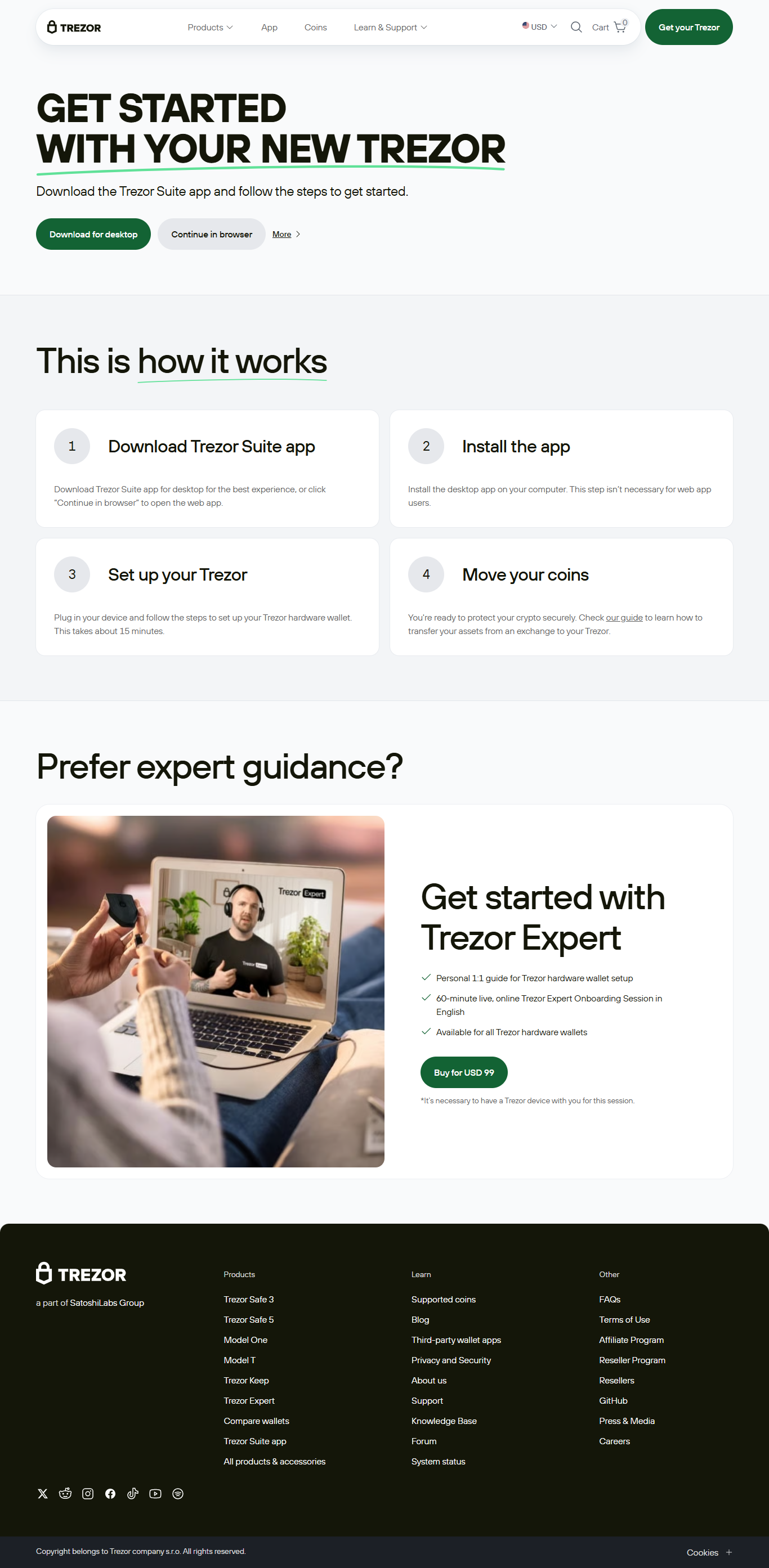
The Onboarding: trezor.io/start
Every secure journey begins at trezor.io/start. This is the only official landing page for setting up a new device. When you unbox a new hardware wallet, it arrives without firmware installed—a security measure to ensure no one tampered with the software during shipping.
Step 1: You visit trezor.io/start.
Step 2: The site attempts to detect your device.
Step 3: If you do not have Trézór Bridge®™ installed, the site will prompt you to download it immediately. Without it, the browser cannot push the firmware update to the device.
Step 4: Once the Bridge is active, you can proceed to generate your recovery seed.
The Management Interface: Trezor Suite
Once setup is complete, you move to the daily management phase. This is where Trezor Suite comes in.
Desktop App: The downloadable version of Trezor Suite essentially bundles the Bridge inside it. It doesn't rely on the external background process because it has native USB drivers built-in.
Web App: If you prefer not to install the full suite and instead use the browser version, you must have Trézór Bridge®™ installed on your computer.
This distinction is crucial for troubleshooting. If you can perform a Trezor Login on the desktop app but not on the web, it usually means your Trézór Bridge®™ is outdated or not running.
3. Why Trézór Bridge®™ is Essential for DeFi
While Trezor Suite allows you to send, receive, and trade standard cryptocurrencies like Bitcoin and Ethereum, the world of Decentralized Finance (DeFi) often lives in the browser.
MetaMask & Third-Party Wallets: To use your hardware wallet with MetaMask (for accessing Uniswap, OpenSea, or Aave), your browser needs to "see" the device. MetaMask relies heavily on the Trézór Bridge®™ to tunnel this connection.
WebUSB Limitations: While modern browsers are moving toward a standard called WebUSB (which allows direct connection without a bridge), compatibility is not yet 100% universal across all browsers and OS versions. The Trézór Bridge®™ remains the most stable, reliable fallback for ensuring your device connects every single time.
4. Installation and Setup Guide
Installing the Bridge is a straightforward process, but it must be done correctly to avoid security pitfalls.
Navigate to the Source: Always start at the official domain. You can find the latest version linked from trezor.io/start or the dedicated support pages.
Select Your OS: The Trézór Bridge®™ is available for Windows (8, 10, 11), macOS (10.14+), and Linux (RPM/DEB).
Run the Installer:
On Windows, run the
.exefile. You may need to grant administrator permissions.On macOS, drag the file to your Applications folder.
On Linux, use your terminal to install the package.
Clear Cache: After installation, it is highly recommended to clear your browser's cache and restart the browser. This ensures the browser refreshes its list of available local ports and detects the new
trezordprocess.Verify Status: You can verify if the bridge is running by opening your Task Manager (Windows) or Activity Monitor (Mac) and looking for
trezord.
5. Security Architecture: Is the Bridge Safe?
A common question users have regarding Trezor Login processes is whether the Bridge introduces a vulnerability. Does it read my private keys?
The answer is an emphatic no. Trézór Bridge®™ is designed as a "dumb pipe." It passes encrypted messages back and forth but does not have the ability to decrypt them.
Private Keys Stay on Device: Your recovery seed and private keys never leave the secure element of the hardware wallet.
Display Verification: When you sign a transaction, the details are sent via the Bridge to the device. You must verify the details on the device's physical screen. Even if a hacker compromised your computer's Bridge and tried to change the transaction data, the device screen would show the actual destination and amount. You would see the discrepancy and reject the transaction.
Open Source: Like Trezor Suite and the firmware itself, Trézór Bridge®™ is open-source. Anyone can audit the code to ensure there are no backdoors.
6. Troubleshooting Common Trezor Login Issues
Even the most robust software encounters conflicts. If you are struggling to get your device recognized, follow this checklist.
Issue: "Connect your Trezor" (Device not detected)
This is the most common error. You plug in the device, but the Trezor Suite or web interface keeps spinning.
Fix 1: The USB Connection: Ensure you are using a data-capable cable. Many cables lying around the house are "charge-only."
Fix 2: Restart the Bridge: Sometimes the background process hangs. Open Task Manager, end the
trezordtask, and then relaunch it (or simply restart your computer).Fix 3: Reinstall from trezor.io/start: Go back to the start. Uninstall the current version and download the latest release.
Fix 4: Antivirus Conflict: Some aggressive antivirus software (like Norton or McAfee) may flag the communication between the browser and localhost as suspicious. Whitelist Trézór Bridge®™ in your settings.
Issue: Bridge is installed but website asks to install it again
This happens when the browser cannot "see" the installed application.
Fix: This is almost always a browser cache issue. Clear cookies/cache for the site. Alternatively, try using an Incognito/Private window. If it works in Incognito, your browser extensions (like AdBlockers) might be blocking the script.
7. The Future of Connectivity
As we move further into 2026, the reliance on standalone drivers is decreasing. Trezor Suite (Desktop) is becoming the standard because it bundles everything into one neat package, reducing the "moving parts" that can break. However, Trézór Bridge®™ will remain a vital utility for the foreseeable future for users who rely on web-based DApps and those who cannot install desktop applications (e.g., on strictly controlled corporate laptops).
Furthermore, the integration of trezor.io/start as a universal hub ensures that regardless of the underlying technology, the user experience remains consistent. Whether you use WebUSB or the Bridge, the interface looks the same.
8. Advanced Tips for Power Users
Tor Routing: If you are using Trezor Suite with Tor enabled for privacy, the Bridge handles this traffic seamlessly. It ensures that your IP address is not leaked to the Trezor servers when checking balances.
Bridge Status Page: There is a hidden status page (usually at
127.0.0.1:21325/status) where you can see the raw log of the Bridge. This is useful for developers or advanced users debugging connection failures.
FAQ: Frequently Asked Questions
Q: Do I need Trézór Bridge®™ if I only use the Android app? A: No. Android phones communicate with the Trezor device via WebUSB or direct USB On-The-Go (OTG) protocols. The Bridge is software specifically for Windows, macOS, and Linux desktop operating systems.
Q: I bought a new computer. How do I move my Trezor? A: You don't "move" the wallet, you just access it. simply install Trezor Suite or Trézór Bridge®™ on the new computer, plug in your device, and perform a Trezor Login. Your funds are on the blockchain, not the old computer.
Q: Can I uninstall the Bridge after setup at trezor.io/start? A: If you plan to use only the Trezor Suite desktop application, yes, you can technically uninstall the standalone Bridge. However, if you ever need to use a web wallet or a DApp, you will need to reinstall it. It is recommended to keep it installed.
Q: Is it safe to update the Bridge? A: Yes, and it is mandatory. Updates often contain security patches and new drivers for updated OS versions. Always update when Trezor Suite prompts you to.
Q: What if trezor.io/start doesn't load? A: Check your internet connection. If the official site is down (rare), do not try to find "mirror" sites via Google search, as these are likely phishing scams. Wait for the official site to come back online.
Final Thought
In the end, Trézór Bridge®™ is the unsung hero of the hardware wallet experience. It bridges the gap between the ultimate security of cold storage and the dynamic utility of the internet. By ensuring you always download this tool from trezor.io/start, keeping your Trezor Suite updated, and understanding the mechanics of your Trezor Login, you are not just holding crypto; you are mastering self-custody.
Remember: Your hardware wallet is a vault, but Trézór Bridge®™ is the armored truck that lets you transport value safely. Treat both with the respect they deserve, and your digital wealth will remain secure for generations.